Overview

National defense
Indeed, there has historically been friction between nations in various aspects such as land disputes, trade conflicts, security concerns, and economic rivalries. These tensions often manifest prominently in border areas. As a result, it becomes crucial for governments to conduct effective border monitoring in order to safeguard the safety and well-being of their citizens.

Border Security
Illicit activities pose significant challenges to nations and their borders, with the ease of movement for people and goods contributing to their proliferation. Narcotics trafficking, smuggling, human trafficking, and illegal migration are examples of activities that can cross air, land, and sea borders. These activities often involve organized criminal gangs that constantly seek advanced methods to evade detection. Given the vast stretches of borders that need safeguarding, employing RF solutions can play a crucial role in maintaining national security and integrity. The discreet network of RF monitoring remains vigilant 24/7, providing continuous surveillance and detection capabilities. By monitoring the RF spectrum, these solutions can detect and identify communication signals associated with illicit activities, helping to track and disrupt criminal networks. RF monitoring systems offer the advantage of passive surveillance, allowing for covert intelligence gathering without alerting the perpetrators to their detection. This discreet approach helps to maintain the element of surprise and enhances the effectiveness of law enforcement and security agencies in countering illicit activities at the border. By employing RF solutions within a comprehensive border security strategy, nations can bolster their efforts to combat and deter illicit activities. Maintaining constant vigilance through RF monitoring assists in safeguarding national security, protecting citizens, and preserving the integrity of borders in the face of evolving threats posed by organized criminal networks.
Drone Defense
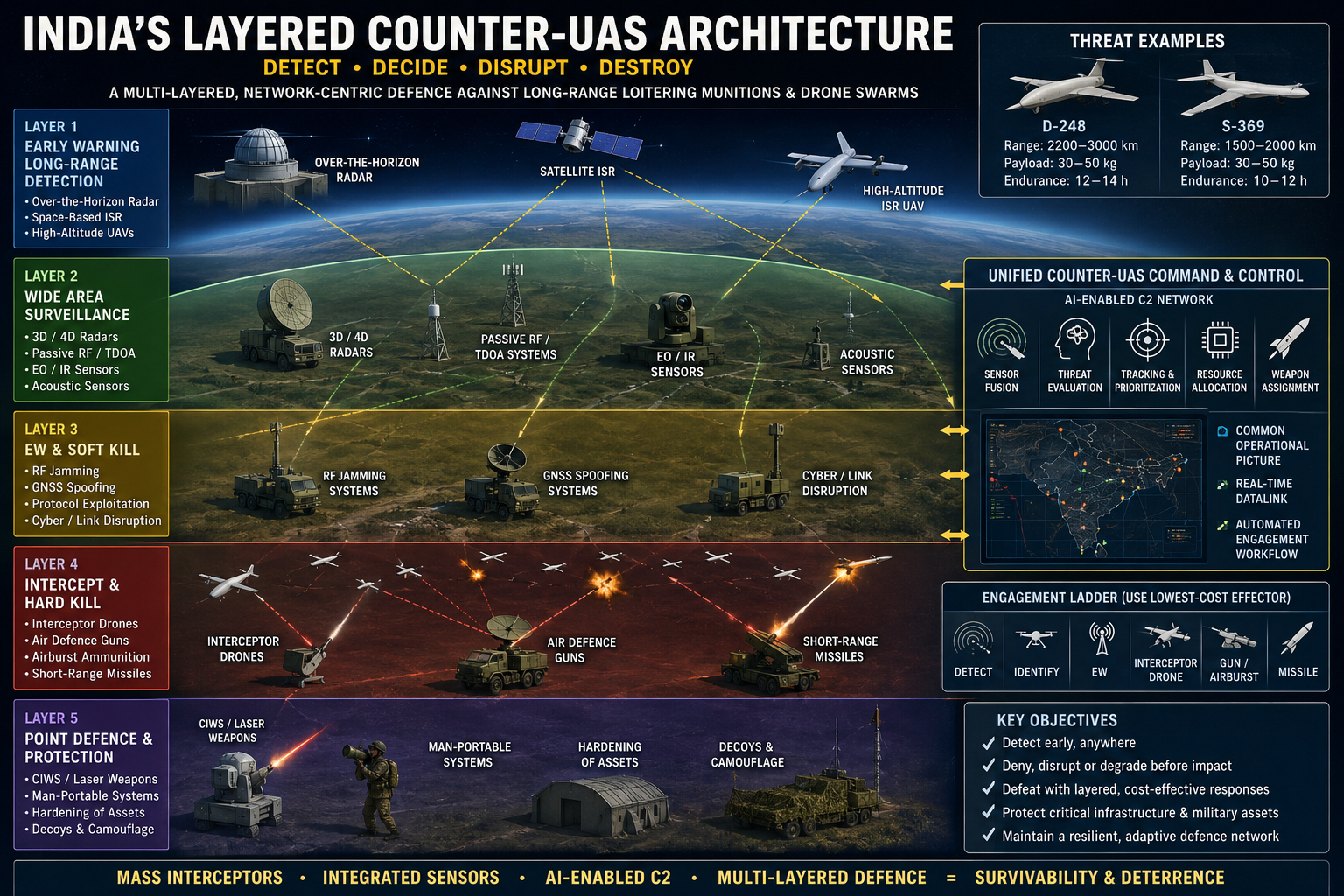
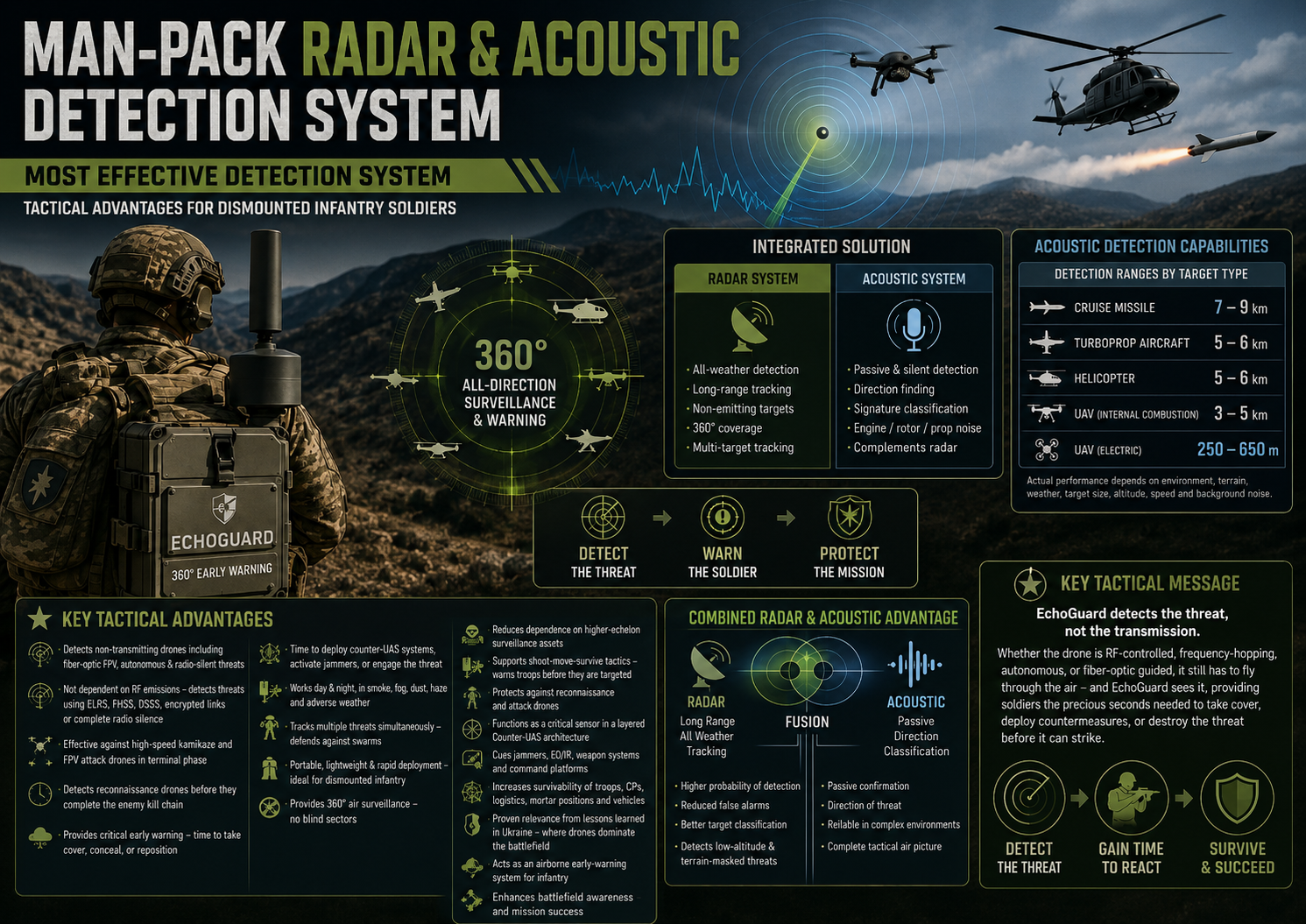
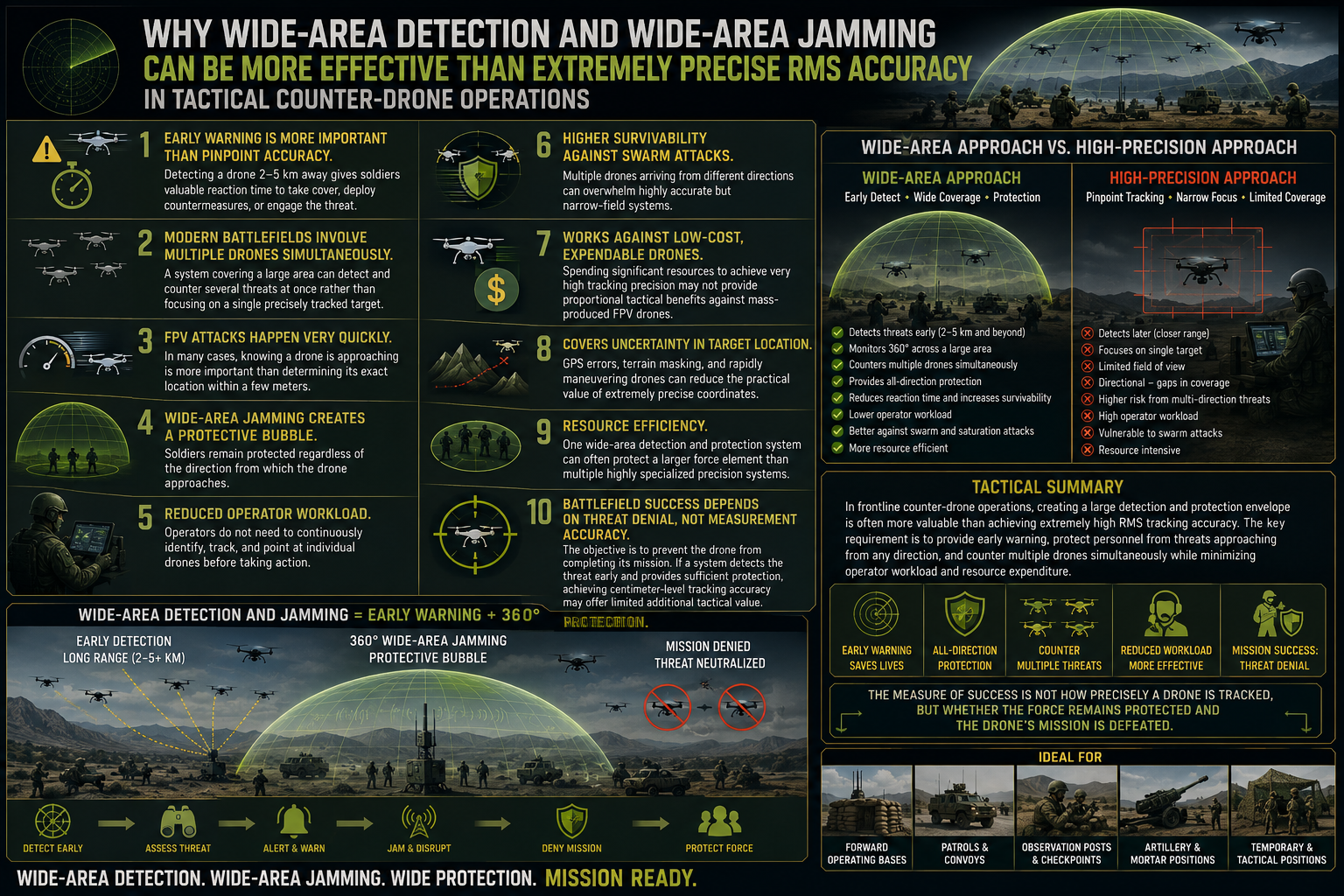
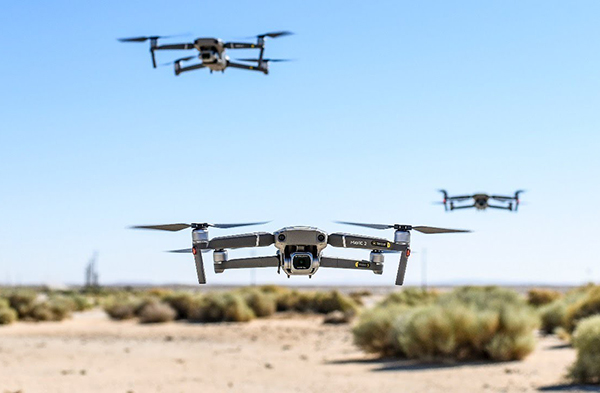
Drones, while being beneficial in many applications, can also be misused for destructive purposes. One such example is the utilization of “narcodrones” for the transportation of illegal substances across borders. This illicit activity has seen a significant rise in recent times. Additionally, drones are also being employed for smuggling firearms, posing an additional security concern. Another growing threat is the use of drones for aerial reconnaissance and potential aerial attacks. This poses a challenge to security forces and necessitates effective countermeasures to mitigate the risk. The use of a network of RF receivers plays a crucial role in addressing these challenges. By tracking and geolocating both the drone and its operators, the RF monitoring system provides valuable intelligence and situational awareness. This capability enables security forces to identify and respond to drone-related threats effectively. By monitoring the RF spectrum, the network of receivers can detect and classify the RF emissions associated with drone operations. This information assists in tracking the location, trajectory, and behavior of the drones, allowing for timely responses and appropriate countermeasures to neutralize the threat. The integration of RF monitoring systems into border security strategies enhances the ability to detect and combat the misuse of drones. It enables authorities to stay ahead of evolving threats and effectively protect borders from illegal activities, including the smuggling of contraband and the potential use of drones for nefarious purposes.

Air Defense
Aircraft are frequently utilized as a means to provoke, infringe upon, or conduct reconnaissance activities in border areas. Given their extended operational range, often spanning hundreds of kilometers, RF monitoring proves to be a valuable tool in gathering passive and covert intelligence on these aircraft. Through RF monitoring, the system can provide valuable insights into the movements, intentions, and classification of these aircraft. By detecting and analyzing the RF emissions emitted by the aircraft, it becomes possible to determine their location, trajectory, and communication patterns. This information contributes to a comprehensive understanding of the aircraft’s activities and assists in assessing their potential threat level. The covert nature of RF monitoring allows for discreet intelligence gathering, without alerting the aircraft or revealing the monitoring efforts. This enables border security forces to maintain an advantage in terms of situational awareness, enhancing their ability to respond effectively to any provocation or infringement. The passive nature of RF monitoring ensures that the aircraft remains unaware of being tracked, allowing for the collection of valuable information without compromising the monitoring operation. By incorporating RF monitoring as part of a border security strategy, authorities can significantly improve their ability to detect and assess the movements and intentions of aircraft operating in border areas. This passive intelligence gathering capability enhances situational awareness, enabling timely and appropriate responses to any potential threats posed by these aircraft.
A flexible and integrated approach
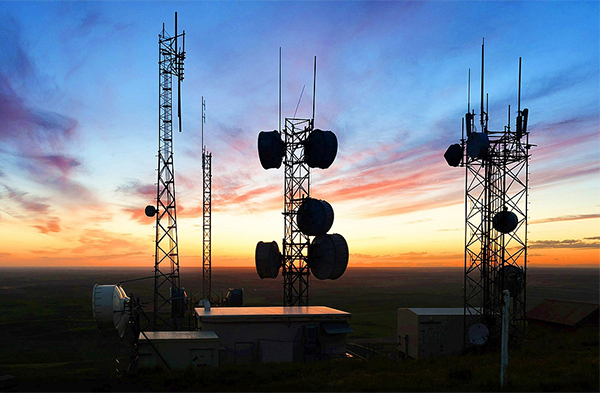
Indeed, RF monitoring is not a one-size-fits-all solution, and the approach can vary depending on several factors. When implementing an RF monitoring system, there are different options to consider based on specific requirements and considerations.One option is to use permanent nodes that are fixed to a tower or a designated location. These nodes provide continuous monitoring capabilities and are ideal for long-term surveillance needs. They can be strategically positioned to cover specific areas of interest and provide consistent monitoring over an extended period.Temporary nodes, on the other hand, are portable and contained within storm cases or other ruggedized enclosures. These nodes offer flexibility and mobility, allowing for rapid deployment in various locations as the situation demands. They are particularly useful in scenarios where temporary monitoring is required, such as during specific events or in rapidly changing environments.Vehicle-based solutions provide another approach to RF monitoring. By equipping vehicles with the necessary monitoring equipment, they can be deployed to different areas and provide on-the-go surveillance capabilities. This approach is beneficial when monitoring needs to be conducted while covering large distances or when monitoring requirements are dynamic and frequently changing.In some cases, a hybrid approach combining different types of nodes may be advantageous. This allows for a tailored and flexible monitoring system that takes into account the specific challenges, time constraints, and topography of the operational environment. By utilizing a combination of permanent nodes, temporary nodes, and vehicle-based solutions, the monitoring coverage can be optimized, ensuring comprehensive and effective surveillance.The selection of the appropriate approach depends on factors such as the duration of monitoring, the specific operational requirements, the geographical and topographical characteristics of the area, and the resources available. By carefully considering these considerations, a customized RF monitoring solution can be implemented to meet the specific needs of the monitoring operation.